Feature
Software Engineer Resume Guide & Example
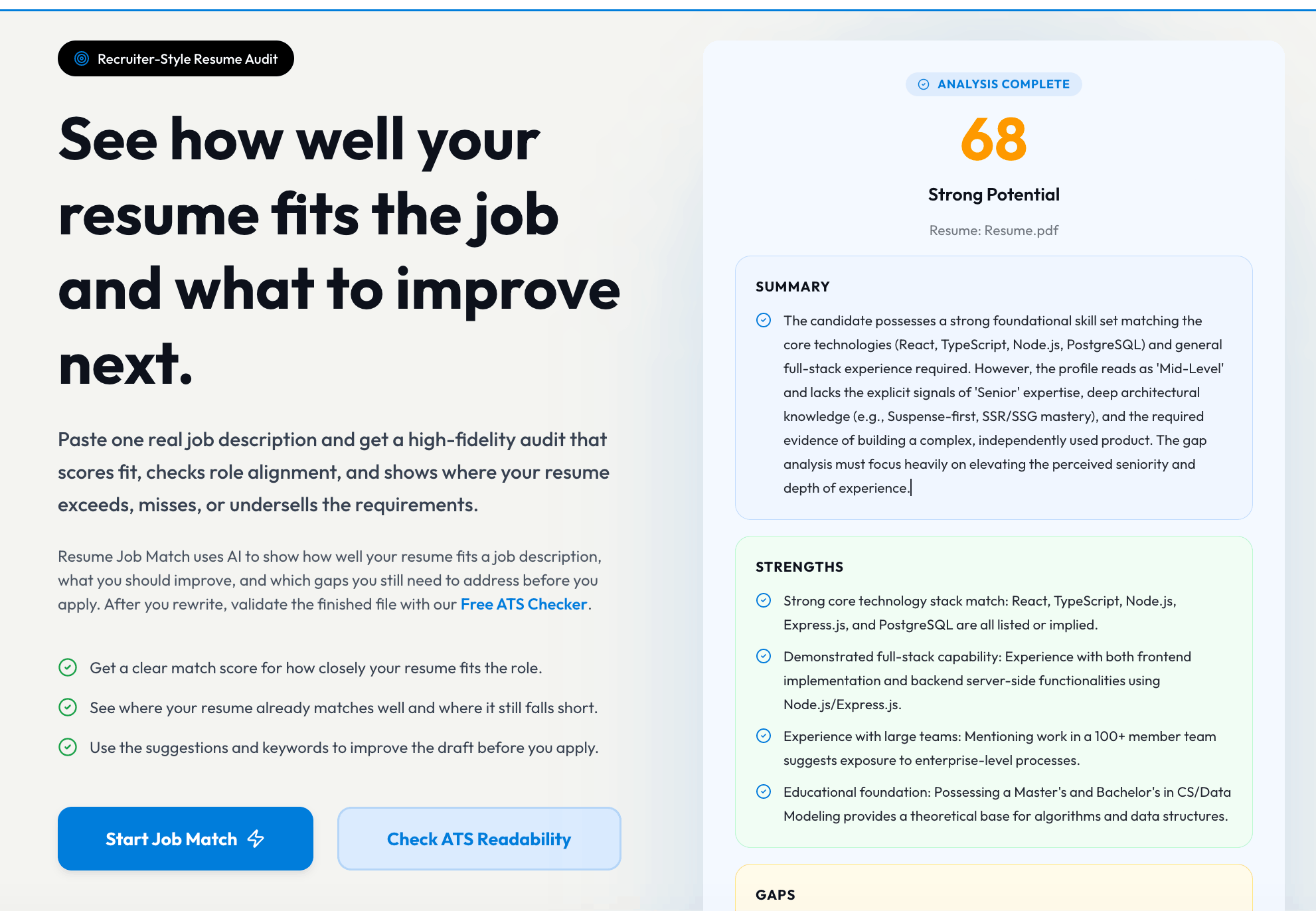
In 2026, a strong software engineer resume must pass three distinct evaluators:
- ATS parsers, now more sophisticated but still reliant on clean structure and keyword alignment
- AI-driven screeners, which evaluate semantic fit, context, and overall candidate strength
- Senior engineers and bar-raisers, who prioritize evidence of ownership, systems thinking, and tangible business or technical impact
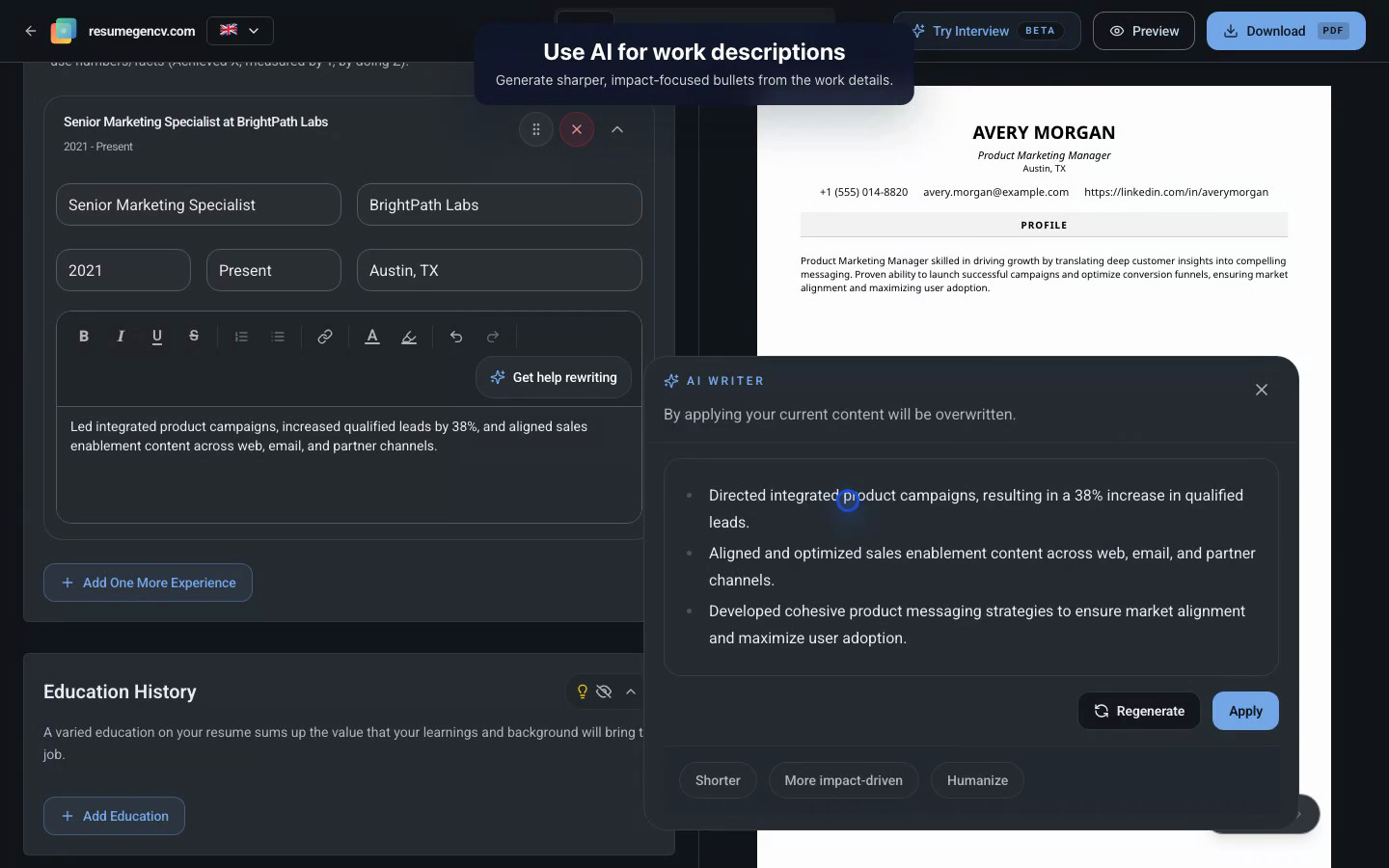
Generic descriptions such as “built features using React” are unlikely to advance. Instead, highlight architectural choices, measurable outcomes, and how you leveraged modern tools—including AI—to deliver results.
A Reliable Resume Structure for 2026
1. Professional Summary
Replace the outdated objective statement with a concise 3–4 line summary placed directly below your contact information. This section provides immediate context for both humans and AI systems.
Example
Fullstack Software Engineer with over five years of experience designing scalable distributed systems and integrating AI-enhanced features. Delivered latency reductions exceeding 40% and supported SaaS platforms serving 200,000+ monthly active users. Proficient in TypeScript, Go, AWS EKS, Kubernetes, and RAG-based pipelines, with a focus on observability and AI-assisted development.
2. Technical Skills
Present skills in clear, parsable categories without tables, icons, or progress bars—elements that can break parsing. Include current and emerging technologies that appear frequently in 2026 job descriptions.
- Languages — TypeScript, JavaScript, Go, Python, Rust, Java
- Frontend — React 19+, Next.js 15+, Tailwind CSS, React Server Components
- Backend & APIs — Node.js (NestJS), Go, GraphQL, gRPC, tRPC
- AI & Data — LangChain, RAG pipelines, Prompt Engineering, Vector Databases (Pinecone, Weaviate, pgvector)
- Cloud & Infrastructure — AWS (EKS, Lambda, Bedrock), Docker, Kubernetes, Terraform, GitHub Actions
- Observability — Datadog, Sentry, Prometheus, OpenTelemetry
Recommendation: Align wording with phrases from target job postings (e.g., “cloud-native architecture” or “agentic workflows”). Semantic similarity now carries more weight than exact keyword repetition.
3. Professional Experience: Focus on Impact and Ownership
Effective bullet points go beyond tasks and metrics. Use strong action verbs, provide brief context, and specify tools or approaches to demonstrate depth.
Recommended structure
Led / Architected / Owned [meaningful initiative] → [quantified result], utilizing [relevant technologies and methods].
Less effective
“Developed checkout feature.”
Strong example
Owned end-to-end redesign of a multi-tenant checkout system using Next.js Server Actions and React Server Components, reducing Time to Interactive by 38% (Lighthouse score improved from 92 to 98) and increasing average order value by 14% through faster load times; added Datadog distributed tracing for full request visibility.
To strengthen these bullets further—particularly when demonstrating problem-solving and leadership—consider the STAR method (Situation, Task, Action, Result). It provides a logical framework to include necessary context without exceeding two lines.
For templates, examples tailored to software engineering roles, and detailed guidance:
Learn more: STAR Method for Resumes & Interviews
Recommendation: Incorporate contemporary signals such as AI tooling adoption (e.g., “accelerated delivery 2.5× using GitHub Copilot and Cursor”), cost optimization, secure design practices, or cross-functional collaboration.
4. Complete Example: Senior Fullstack Software Engineer Resume (2026)
Alex Rivera
San Francisco, CA • alex.rivera.dev@email.com • (415) 555-0123
github.com/arivera • linkedin.com/in/arivera-dev • arivera.dev
Fullstack Software Engineer – Scalable Systems & AI Integration
Professional Summary
Results-oriented engineer with expertise in distributed systems, real-time data processing, and AI-enhanced product features. Consistently delivered latency improvements of 40%+ and supported high-scale SaaS platforms. Deep experience across TypeScript/React/Go stacks, Kubernetes orchestration, and RAG architectures.
Technical Skills
Languages & Frameworks — TypeScript, Go, Python, React 19, Next.js 15, Node.js/NestJS
AI & Data — LangChain, Retrieval-Augmented Generation, Vector Databases, Prompt Engineering
Cloud & DevOps — AWS (EKS, Lambda, Bedrock), Docker, Kubernetes, Terraform, GitHub Actions
Observability — Datadog, Sentry, Prometheus, OpenTelemetry
Professional Experience
Lead Software Engineer
TechFlow Solutions, San Francisco, CA
January 2024 – Present
- Architected real-time analytics platform using Go, Kafka, and ClickHouse; sustained 75,000+ events per second at <80 ms p99 latency while reducing infrastructure costs by 28% through automated scaling policies.
- Directed migration from monolith to AWS EKS-based microservices architecture, achieving 15× faster deployment cycles (weekly to 10+ per day) with zero-downtime releases.
- Designed and implemented RAG-powered internal search using LangChain and PostgreSQL pgvector, increasing tool accuracy by 62% and decreasing support tickets by 31%.
Software Engineer
InnovateApp, Remote
June 2021 – December 2023
- Led performance optimization of core SaaS dashboard serving 200,000+ monthly active users in React, TypeScript, and Next.js; reduced bundle size by 25% via code-splitting and lazy loading, improving page load time by 1.4 seconds.
- Implemented observability instrumentation with Datadog and OpenTelemetry, reducing mean time to resolution (MTTR) by 45% during production incidents.
- Mentored five engineers and established automated testing and CI/CD standards, resulting in an 18% reduction in production defects.
Education
B.S. in Computer Science
Georgia Institute of Technology, 2020
Certifications
- AWS Certified Solutions Architect – Associate (2024)
- Google Professional Cloud Architect (2025)
Selected Projects
- Open-source RAG chatbot template built with Next.js and LangChain (1.2k GitHub stars)
5. Why This Approach Succeeds in 2026
- Clear context, tools, and outcomes help both AI systems and humans recognize strong performance.
- Consistent quantification (percentages, time saved, cost reductions, user scale) demonstrates credibility.
- Single-column, text-only layout ensures compatibility with major ATS platforms (Greenhouse, Workday, Lever) and clean PDF exports.
- Inclusion of current practices—AI tooling, observability, efficiency gains—signals technical currency.
2026 Software Engineer Resume Checklist
- Include GitHub, LinkedIn, and portfolio links in the header
- Write a concise, value-focused Professional Summary
- Organize skills into logical categories with relevant 2026 keywords
- Structure bullets around ownership, modern tools, and measurable impact
- Include metrics in every experience bullet point
- Use a simple, single-column, text-based format (no columns, graphics, or images)
- Tailor each application by semantically aligning with 8–12 key phrases from the job description
- Validate with tools like Jobscan or Teal for ATS and semantic compatibility
Create Your 2026 Software Engineer Resume – Start Free