Feature
10 Common Resume Mistakes That Cost Interviews
In 2025, the job market is tougher than ever. Recruiters scan hundreds of applications per role, spending an average of just 7-8 seconds on the initial review, based on Ladders' 2018 eye-tracking study finding 7.4 seconds.
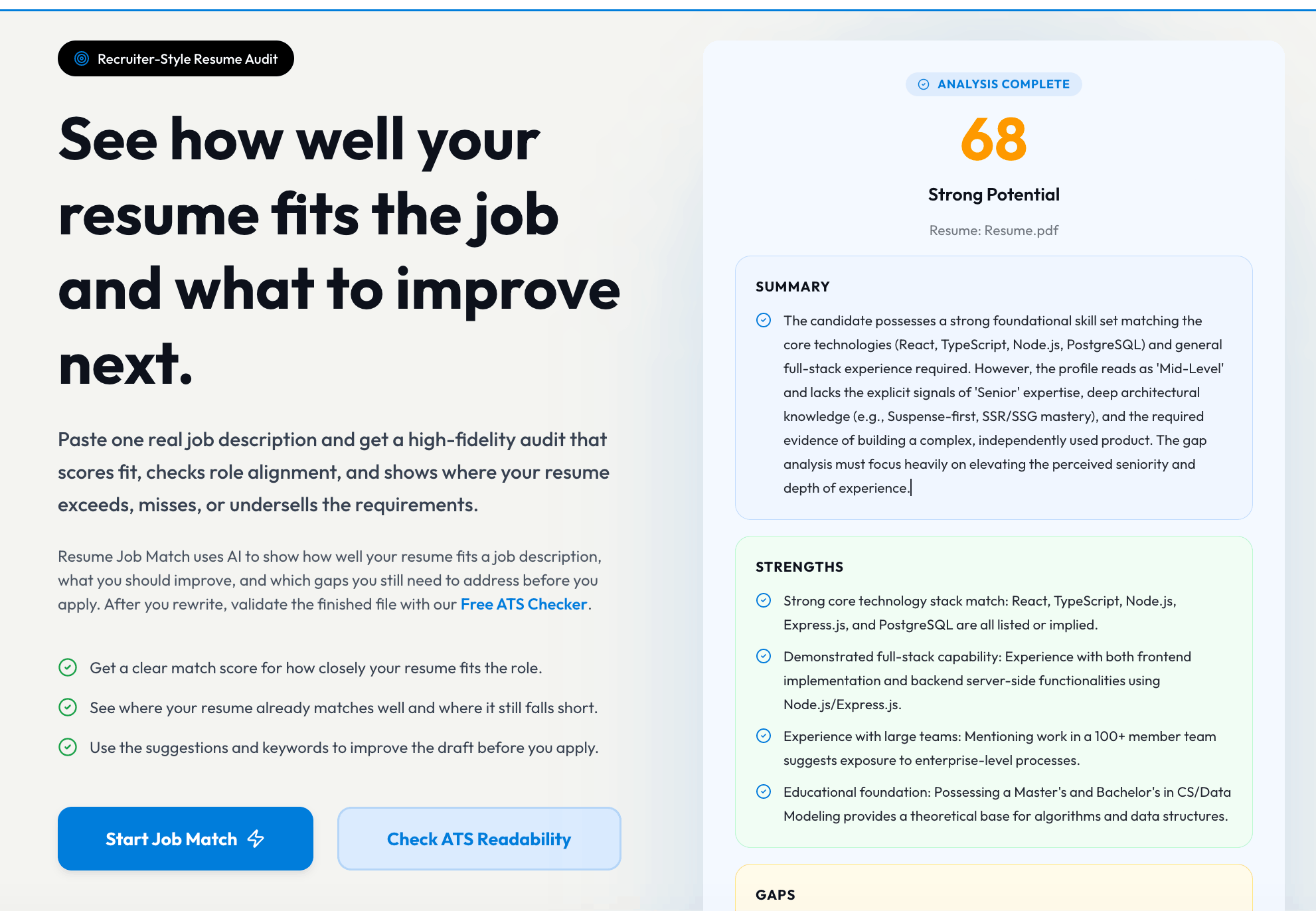
With over 90% of large companies using Applicant Tracking Systems (ATS) to filter resumes, many qualified candidates are getting deprioritized due to formatting or keyword issues. One small mistake can lower you changes in the over growing pile of resumes that needs attention.
A strong resume tells a clear, relevant story tailored to the role.
10 Resume Mistakes That Reduce Your Chances in 2026
1. Typos and Grammatical Errors
Even one typo signals carelessness. Surveys shows that 77-80% of recruiters reject resumes with spelling or grammar mistakes.
Why it hurts: In roles requiring attention to detail, it's a red flag. Even in others, it suggests you rushed.
How to fix: Proofread multiple times. Read backwards, use tools like Grammarly, then have a friend review. Zero errors is the goal.
Nearly 60% of resumes contain typos — don't be in that majority.
2. Not Tailoring to the Job Description
Using the same generic resume for every application. Recruiters spot this immediately while ATS filters punish missing keywords.
Why it hurts: With 250+ applicants per role on average, untailored resumes score low in ATS and feel irrelevant.
How to fix: Customize every time. Incorporate 8-12 exact phrases from the JD naturally. Save versions by company.
3. Listing Duties Instead of Quantified Achievements
Bullet points like "Responsible for sales" or "Managed team" have no impact.
Why it hurts: Anyone can list responsibilities. Recruiters want proof of results.
How to fix: Use the formula: Action verb + Task + Quantified Result.
Weak: "Managed social media"
Strong: "Grew Instagram engagement 180% YoY, driving $220K attributable revenue"
Examples:
- Marketing: "Delivered campaigns with 3.2x ROAS, generating $1.8M pipeline"
- Engineering: "Optimized code reducing latency 42%, boosting retention 18%"
4. ATS-Unfriendly Formatting
Fancy designs, tables, columns, graphics, headers/footers, or images.
Why it hurts: ATS can mangle these, hiding content or lowering your score. Many resumes get deprioritized this way.
How to fix: Single-column, standard fonts (Arial/Calibri 10-12pt), .docx or plain PDF. No tables, icons, or photos (unless creative role).
5. Overly Long or Irrelevant Content
3+ pages for non-executives, or including ancient jobs/hobbies unrelated to the role.
Why it hurts: Recruiters prefer 1 page for <10 years experience, 2 pages max for most. Irrelevant info buries your strengths.
How to fix: 1 page ideal for early/mid-career; 2 pages if 10+ years. Focus on last 10-15 years. Cut high school, unrelated volunteering unless skill-building.
6. Weak or Missing Professional Summary
No hook at the top, or a generic "hard worker seeking opportunity."
Why it hurts: This is what recruiters read first in those 7-8 seconds.
How to fix: 3-5 tailored lines: Your expertise + key wins + value for THIS role.
Example: "Senior Full-Stack Engineer with 8 years scaling consumer apps. Led microservices migration cutting load times 55% and supporting 3M new users."
7. Vague Skills Without Proof
Listing "Microsoft Office" or "team player" with no evidence.
Why it hurts: Cliché and unprovable. ATS wants specific hard skills from the JD.
How to fix: 8-12 targeted hard/technical skills. Prove them in experience bullets. Skip soft skills unless quantified.
8. Unprofessional Contact Details
Old email like "partygirl92@hotmail.com" or missing LinkedIn.
Why it hurts: Suggests poor judgment. Unprofessional emails cause instant rejections.
How to fix: Firstname.lastname@gmail.com. Include phone, city, customized LinkedIn URL. No photos, age, or full address.
9. Fully AI-Generated Content (Without Personalization)
Robotic, perfect phrasing that feels soulless.
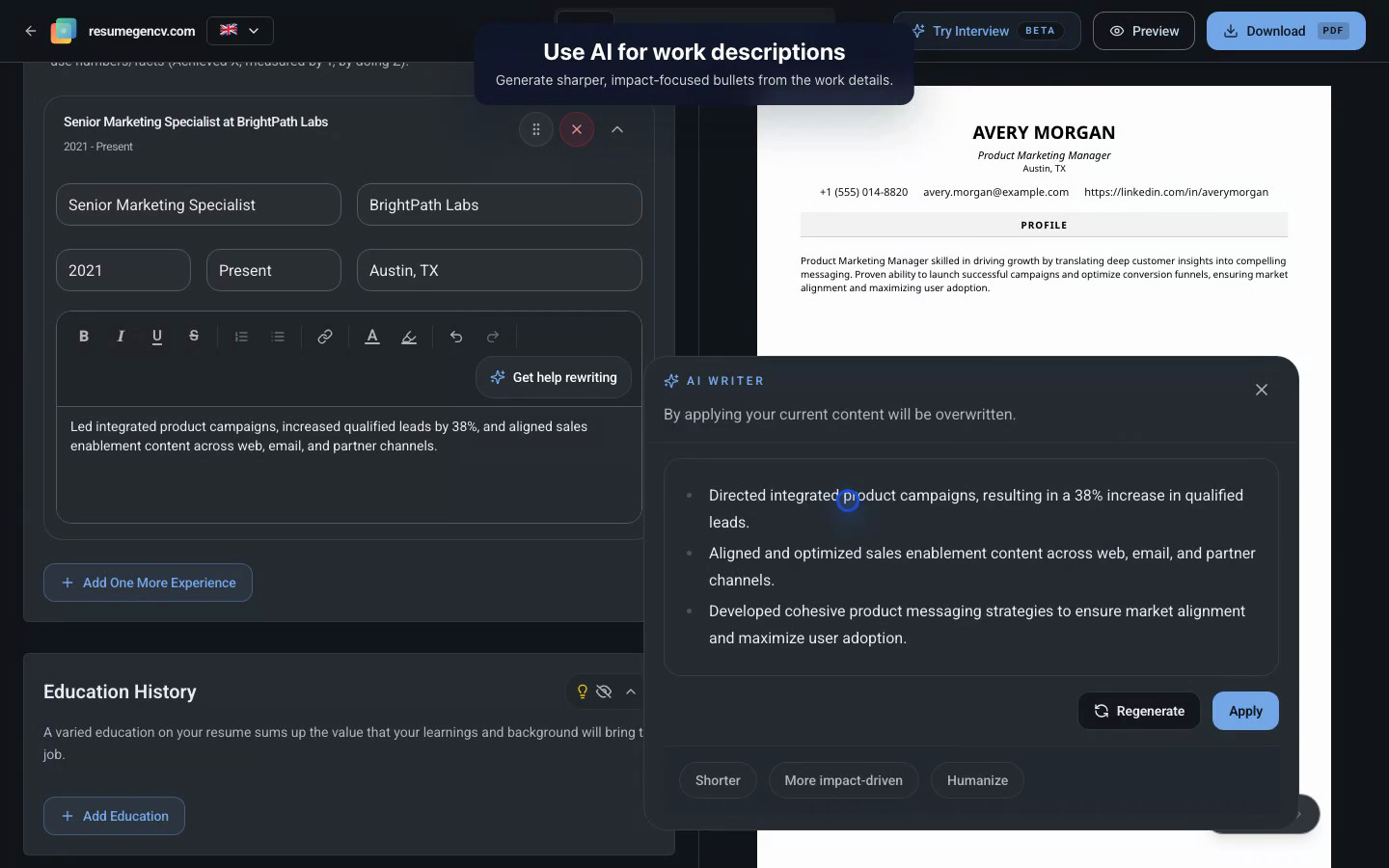
Why it hurts: With many candidates using AI, recruiters spot generic output fast — and many reject it.
How to fix: Use AI as a starting point/editor. Rewrite in your authentic voice. Add personal details only you know.
10. Including Outdated or Risky Sections
References, salary history, hobbies, or objective statements (unless entry-level).
Why it hurts: Wastes space; references/privacy issues; objectives are self-focused.
How to fix: Skip references ("available upon request" unnecessary). No salary/benefits talk. Hobbies only if directly relevant and impressive.
2025 Resume Checklist
- Zero typos/grammar issues (proofread 3x)
- Tailored keywords naturally woven in
- 70%+ bullets quantified
- Clean, single-column ATS-safe format
- Strong, customized summary
- Relevant experience only (1-2 pages max)
- Hard skills backed by achievements
- Professional contact info/LinkedIn
- Authentic voice — personalized, not AI-perfect
Alex Rivera
alex.rivera@email.com • linkedin.com/in/alexrivera • San Francisco, CA
Professional Summary
Full-Stack Engineer with 8 years experience building consumer-facing apps at scale. At TechCo, led migration to microservices architecture that cut load times 55% and supported 3M new MAU. Passionate about clean code and user-centric design — excited to help [Company] scale its next-gen platform.
Skills
JavaScript (React/Node), Python (Django), AWS, Docker, Kubernetes, SQL/PostgreSQL, GraphQL, CI/CD, System Design
Experience
Senior Full-Stack Engineer
TechCo, Remote
Jan 2021 – Present
- Architected microservices rewrite serving 12M+ users, reducing latency 55% and downtime 82%
- Mentored 6 junior engineers, improving team velocity 28%
- Owned end-to-end feature delivery, shipping 14 major releases with 41% avg uplift in key metrics
Full-Stack Engineer
StartupX, San Francisco
Jun 2017 – Dec 2020
- Built core marketplace feature from scratch, driving $2.8M GMV in first year
- Optimized database queries, cutting costs 38% ($180K annual savings)
Education
B.S. Computer Science
University of California, Berkeley
2017
Avoid these 10 mistakes, and your resume will survive the 7-8 second scan, beat the ATS filters, and land in the "interview" pile even in 2025's flooded market.
Looking Ahead: The Job Market Outlook for 2026
As we close out 2025, forecasts for 2026 point to continuity rather than dramatic change. Most economists and reports (from Indeed, The Conference Board, and others) predict a "low-hire, low-fire" environment persisting: slow GDP growth around 1.8%, unemployment stabilizing or slightly rising to 4.4-4.7%, and cautious hiring amid policy uncertainties like tariffs and immigration changes. AI will play a bigger role, reshaping tasks in many roles and increasing demand for AI-savvy professionals while potentially displacing routine work. Growth will favor sectors like healthcare, education, and certain tech niches, but entry-level and younger workers may face ongoing challenges.
The good news? A flawless, tailored resume like the one outlined here will give you a real edge in a selective market. Focus on quantifiable impact, ATS compatibility, and authentic storytelling and you'll be positioned to thrive no matter how 2026 unfolds.